Thursday, January 2, 2014

Spirits in the Sky


For the past couple of nights I've been taking advantage of both some beautiful night skies and the low-light capabilities of my new Canon 5D Mark II camera. This camera is just awesome for making night images. The image above is a 30 second exposure taken at ISO 3200, which I never could have done with my old camera. The old camera at ISO 3200 would have had so much noise that the image would have been unusable. By using such a high ISO setting, the camera was also able to pick up the Milky Way in the image.


The image above is a 2 hour exposure made between 11:00 p.m. and 1:00 a.m. This image was shot at ISO 100, but even with such a low ISO setting, at 2 hours most cameras would still be producing unacceptable noise levels. Not so with the 5D Mark II! The image is very clean, with very acceptable noise levels. It should be noted that in the above image, the glow of light on the horizon is not from the sun or the moon, but rather from the city lights of Thunder Bay, Ontario, which is about 40 miles away.

The image below was a 1.5 hour exposure, taken this time from 2:30 a.m. to 4:00 a.m. This time of year, by 3:30 a.m. the sky is already starting to show signs of light from the coming sun, and by running the exposure until 4:00 a.m. the final image looks almost like the blue sky that you see during the day.

Monday, December 30, 2013

Great comments on lwt skiing....

Ski season is about over here....just a bit more to be had.


For another look inside the current cutting edge, from Brian's blog:


"It's no longer "all about the down" and I have addressed the issue of boot weight previously. The only thing I will say is that taking weight off your feet is one of the best "weighs" to get your motor running. Any of the offerings from Dynafit, La Sportiva and Scarpa involving carbon fiber will do the trick."


http://www.getstrongergolonger.com/journal//7/17/grand-teton-speed-project-update-weight-matters.html


Next up...hopefully some sun in the NW, rock, road bikes, tris and thealpine. August OR show coming up quickly as well.

Friday, December 27, 2013

Red Angel's Trumpet


A bright red angel's trumpet, Brugmansia sanguinea, at the UC Berkeley Botanical Garden.

More Unfinished Business: Alpine Diversions (5.8), but not Insuhlation (5.9)


(Photo: Just over the big roof on pitch two of Alpine Diversions (5.8).)


As I've worked my way through a bunch of 5.9 routes at the Gunks this past year, a certain route has been hanging out there in the background, taunting me. It is a two-star route that is supposed to be really good. It also happens to be the route on which I broke my ankle in : Insuhlation (5.9).


A part of me has really wanted to go back and climb it-- to slay the demon, as it were. To put it behind me. And to find out what I think of the route, two years later. Who knows, maybe if I climbed it now I'd find it to be no big deal.


But another part of me wants nothing to do with Insuhlation. I worry that I'd become a shivering wreck if I led it again; that I'd be so in fear of a repeat injury that it would become a self-fulfilling prophecy. And a repeat injury on Insuhlation would be absolutely ridiculous. I can't let that happen. I'd never forgive myself.


Perhaps the thing that makes me most wary of Insuhlation is that I don't really know why I fell off of it when I did. I am also unsure of whether I could have done anything to better protect myself. I recall a little roof, and a (wet) keyhole-like hold that I tried to use briefly while reaching for a chalked-up, bigger hold above that I thought would be a jug. I remember grabbing this jug and finding it to be not so juggy. I had a green Alien below the little roof and I was looking around for more pro (but finding none) when I went flying.


Did my hand slip off? Did my foot? Was there better pro available than what I had? I'd feel better about going for it again if I had answers to these questions.


I had a brilliant idea about halfway through the season. It suddenly occurred to me that I should have one of my partners lead the route, and then I could follow it. It is such an obvious idea, I don't know why I never thought of it before. I could, for example, send my reliable guinea pig Adrian (who seems always willing to lead anything) up there and then as a second I could suss out whether I thought I could safely lead it at a later date.


But then Adrian led the route with another partner before I had a chance to suggest it to him. It didn't seem right to try to make him go right back to do it again. Adrian's impressions seemed to be that the last bits of the route were totally straightforward, and well-protected too. Hearing this only deepened the mystery for me.


As the year came to a close and the climbing season extended into an unseasonably warm December, I came up with another idea. I decided to lead the route right next to Insuhlation, a 5.8 called Alpine Diversions. Dick Williams gives the route a single star and calls it "surprisingly good." It seemed worth checking out in its own right. And it goes very close to Insuhlation. The second-pitch crux roof is only a few feet to the right of the Insuhlation crux, or so I believed. I thought I could lead Alpine Diversions and get a good look at the exact place where I fell. I might even get some ideas for some placements I missed. Maybe it would help me decide whether to lead it again, and if I felt good on Alpine Diversions I could do Insuhlation immediately thereafter.


So on December 4 when I climbed with Liz I suggested we try Alpine Diversions. Liz was game to try it.


I thought both pitches were just okay. Each pitch has one interesting crux moment and not too much else to offer.


On pitch one the interesting moment comes right off the ground. The pitch follows a thin, steep vertical crack running a few feet to the left of a little gully. One hold, a sidepull, is easy to reach. A jug sits above. If you are tall enough to reach the jug from the ground, you will probably find the opening moves to be a breeze. If, however, you are short like me, you will have to boulder up to the jug. And this boulder problem is a puzzler. I don't want to spell it all out but I will tell you to look around to either side of the crack. I found another crucial hold off to the left which made all the difference for me. This hold allowed me to get on the wall and reach up to the jug. And once I had the jug, I threw in a piece and made another step up to find that the pitch was essentially over.


Dick Williams suggests in his description that you continue directly over a blocky overhang and then up to the belay ledge past the big pine in "the steepest way." What this all means (I realize in retrospect) is that the route is contrived. After the opening boulder move, there are ways to force yourself to continue making 5th class moves. But in order to do so you have to deliberately avoid easier climbing just a step to the left or right. I didn't really see the point. It just seemed silly not to scamper up the stair-like blocks past the tree to the belay ledge.


On pitch two, the main attraction is a rather large overhang. Nice moves up a corner take you directly underneath it. Then an easy move left might deceive you into thinking you've already escaped the crux. But no. You still have to move right and pull the roof. It is a big reach. I really enjoyed this crux move. And there's great pro at the lip of the overhang.


After the roof, you again have the option to force yourself to keep climbing. You can move left and up to another roof, this one smaller and dirtier (and from the looks of it easier) than the first. On the other hand, if you just continue straight up you are basically done. Some easy low angle moves will take you to the belay tree. I chose the easy way, again not seeing much point in contriving a harder path to the finish.


When I reached the top I realized that I had forgotten to look at Insuhlation! The roof on Alpine Diversions had captured my full attention. Once above the roof, I probably could have glanced over at the exact spot where it all went wrong two years ago. But as obsessed as I am, as much as Insuhlation haunts me, I still didn't think to do it.


I had already decided I didn't have the stomach for doing Insuhlation, anyway. But still I was bummed to have missed out on the chance to look over the route up close.


On rappel I attempted to scope it out. To my surprise, I couldn't spot the line at all. Maybe I was too far to the left, but I had no luck in finding it. I thought I'd immediately see the roof, the keyhole, the jug. But I saw nothing I recognized. It was baffling.


I'm pretty sure that if I ever get back to climbing Insuhlation the whole experience will seem new to me. I want to go try it. But I don't want to approach it in an unhealthy state of mind. I don't want to climb it to prove anything. I don't want to climb it all stiff and scared. I think the whole accident thing is still too much in my head, even two years later. Better to wait.

Sunday, December 22, 2013

Once More with Feeling: the Return of the Winter Tire Dilemma

Snowy Streets, Cambridge MA

After last year's mild winter, this holiday season caught us off guard with a bountiful snowfall. My two ridable transport bikes at the moment are a Brompton and a 650B prototype mixte (more on that soon). The mixte sports 42mm Grand Bois Hetre tires, and so I thought it would be a great idea to ride it in the snow. After all, the Hetres ride so nicely over unpaved, uneven terrain. Crusty snow feels kind of similar. I took to the streets.


Here I will pause to admit, that despite 3 previous winters of cycling behind my belt, I had never before ridden on roads that look quite like what's pictured here. There was never a need to, since our neighbourhood usually gets plowed and salted pretty thoroughly. Typically the streets look morelike this-with snowbanks piled high on the sides, but the travel lanes mostly cleared. This time around, maybe on account of the holidays, they had not cleared the snow all that well. I got to experience the real deal.


Snowy Streets, Cambridge MA

The snow on the roads created terrain of three distinct categories. There was the even, packed snow. Riding on it felt similar to riding on post-rain dirt roads, nicely packed and kind of softish. The Hetres handled well there. There was the crusted-over snow, uneven and slippery at times, though not outright icy. This too felt manageable. And then there were the occasional stretches of deeper, slushier snow. I expected it to feel similar to mud, but it was way more slidey and my front wheel kept fishtailing. Still, overall I thought that the tires did fine. There were only a few stretches where I felt uneasy, and I attributed that to a lack of confidence.


So I got home and uploaded some pictures of my snow ride, planning to comment on how decently the Grand Bois Hetres handled. But promptly the pictures received feedback from others to the opposite effect, warning that these tires ride poorly in the snow. The fact that I happily rode them and felt they were fine strikes me as funny - in a concerning sort of way. Ideally, I'd like to be able to tell the difference between lack of traction and lack of confidence.


Snowy Streets, Cambridge MA

And so, once more the Winter Tire Dilemma is upon me. Naturally, everyone is suggesting studded tires. This is my 4th winter commuting by bike and I have yet to try them. Partly this is because they are expensive and I cannot seem to commit to a wheel size. I am riding 650B now, but in winters past I've ridden 26", 28" and 700C, and who knows what I'll be riding next winter. I am also convinced that getting studded tires and mounting them on my bike will activate the Umbrella Carrying Principle, ensuring that I will not need them.


Finally, the very fact of having gotten through 3 winters without them makes me question whether I really need studs. Winters here aren't really that bad, and tires with some tread seem to do pretty well. The Schwalbe Marathon Plus are the husband's favourite for city slush and snowy paths alike, and they are even available for the Brompton's wheel size. The performance-oriented Continental Top Winter IIs also come highly recommended. Knobby mountain bike tires are another popular choice. One issue, as I understand it, is that no tire is equally good for both snow and ice. Studded tires help with ice, but not snow. Tires with heavy tread help with snow, but not ice.This winter, my commutes cover longer distances and more remote areas than previously, so a good winter tire is worth considering ...though with all the choices and factors involved, I suspect spring might come by the time I decide.

Saturday, December 21, 2013

I'll miss you


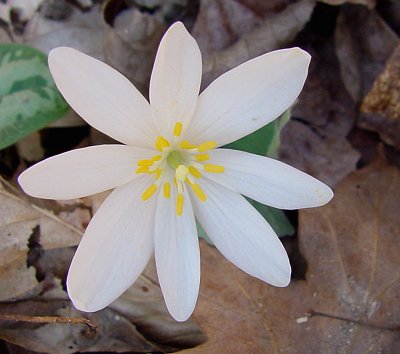
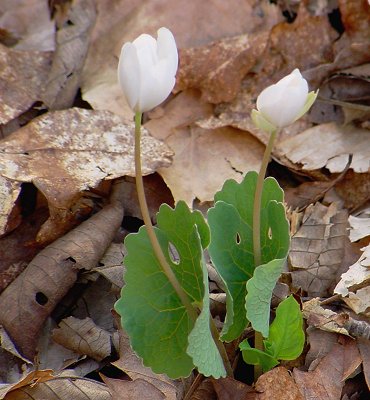
I can scarely believe that the Bloodroots are almost gone. Every year it seems I haven't spent enough time with them.


Closed up for the night.

I visited a really special place with some of my fellow wildflower nuts. I'll share it once I can get Blogger to start cooperating better... I'm having a little trouble uploading photos at present.

Friday, December 20, 2013

Bike Lane Etiquette?

Having just returned from our stay on Cape Cod, I am greeted with a remarkable development: There are now bike lanes on one of the most hated stretches of road near my neighborhood. While normally I avoid this road, today I found reasons to travel along it multiple times just to experience its Disneyfication - for the city has also planted trees and installed decorative streetlights, in attempts to disguise the faded vinyl-siding of the multi-family homes and the peeling storefront signs that say things like "Used Tires". Why if Boston keeps this up, soon the last of the gritty neighborhoods will turn shiny and pleasant and there will be nothing to complain about!


Apparently, we are hardly the only town experiencing such shocking advances in bicycle infrastructure. A friend from Virginia has written me with the news that there are now bicycle lanes in Harrisonburg, and he - a lifelong cyclist sans lanes - does not quite know how to behave in them. Where is one supposed to pass? How to deal with joggers in the lane?


While I am by no means an authority, I will contribute my ideas on bike lane etiquette. Please note that although these contain commentary on safety, they are meant as thoughts on polite behaviour and are notsafety tips.


1. Positioning within the bike lane

It is a good idea to cycle in the left half of the bike lane, as this positioning places you out of the "door zone" (i.e. you will not get struck by a car's door, should one suddenly fling open). Occasionally, a misguided cyclist or driver may shout at you to scoot over to the right, so that they can pass you easier - but don't allow yourself to be guilted into listening to them. Instead, politely explain about the door zone and why your positioning in the lane is necessary.


Try to keep to a consistent line within the bike lane; don't weave. Drivers and other cyclists can get freaked out by weaving cyclists, and in turn behave irrationally.


2. Passing other cyclists

Passing other cyclists should be done on the left, never on the right. If you pass on the right, you endanger both yourself and the cyclist you pass, by nullifying the distance between the two of you and the door zone. Pass the slower cyclist by going around them on the left (into the traffic lane), naturally checking that the lane is clear first. Should another cyclist attempt to pass you on the right (you can sometimes sense them coming up behind you), I think it is perfectly fine to tell them not to do this ("Please don't pass on the right" or "Please pass me on the left").


3. Yielding to turning vehicles

Yield to turning vehicles in the lane, be they cars or other bicycles, instead of attempting to go around them as they are making the turn. Even if you manage to do this safely, it is disturbing to the vehicle to suddenly see you beside them as they attempt to execute a traffic maneuver.


4. Yielding to pedestrians

If the bike lane intersects a crosswalk, yield to pedestrians in a way that makes them feel safe - don't just cycle around them within inches of their person... And please don't even think of ringing your bell at pedestrians to make them cross faster (I have witnessed cyclists do this in Boston).It is the pedestrian's right to be in the crosswalk and your obligation to yield.


On the other hand, it is not the pedestrian's right to be in the bike lane itself, whether they are jogging or rolling a baby carriage, or whether it is a group of people caught up in chatting. If a pedestrian is blocking a bike lane, I think it is only fair to ring your bell and/or politely say something like "Excuse me, bike lane!" so that they move out of your way. It is rude of them to block the lane; it is not rude of you to point out that they are blocking it and ask them to move.


5. Positioning when stopped at intersections

When stopped at an intersection, stop before the crosswalk - as opposed to blocking it (as shown above), as some cyclists do in order to get a head start. It's not very nice to make pedestrians go around you as they attempt to cross the street.


If other cyclists are already stopped at the intersection when you arrive, it is generally considered polite to stop behind them - as opposed to next to them, in an attempt to compete for who goes first when the light turns green.


6. Turning

Communicate your intention to turn by signaling and merging into the turn lane early on, rather than at the last moment, so that drivers are not surprised and can yield to you properly.


Observe the same rules as if you were a motor vehicle: When making a left turn, yield to oncoming traffic; when turning right on red, yield to pedestrians crossing and to cross-traffic.


7. Wrong way in the bike lane?

I think the reason some cyclists engage in this behaviour, is to make an easier left turn. However, it is wrong and inconsiderate to"salmon" in the bike lanes; please don't do it. And I think it is perfectly acceptable to ask other cyclists not to do it.


8. Cycling onto the sidewalk

Upon reaching their destination, some cyclists transition onto the sidewalk and continue to cycle - dismounting when they reach the bike rack, or the front door of the building they will be entering. My view is that cyclists should dismount upon reaching the sidewalk, and walk their bike thereafter.


9. Speed

As while driving, it is common sense and common courtesy to slow down when executing delicate maneuvers in traffic. It is also common courtesy not to jeopardise the safety of other cyclists, even if you are in a hurry. Sometimes you just have to go with the flow of bicycle traffic, even if technically you are capable of going faster.


10. Interaction with drivers and other cyclists

Please... just be polite. If you are annoyed or frightened by a driver or another cyclist, it is never a good idea to express that sentiment by immediately insulting them or shouting obscenities. An urgent tone of voice does not need to be abusive. "You almost killed me!" in an alarmed voice is more effective than "You almost killed me, you goddamn idiot!" in a hostile voice. While it may be tempting to shout the latter version, consider that doing so can actually escalate conflict and further endanger you.


With more cities across the US creating bicycle lanes, the numbers of new cyclists out on the roads is growing. And while different states have different degrees of regulations when it comes to cycling, I think there are certain aspects of using the bike lanes that are a matter of common sense and courtesy. I hope my suggestions are useful to new users of bike lanes. Your feedback, whether in agreement or disagreement, is welcome.